
Why you're struggling to lose weight
Ok, this is a big topic. We could start by saying that your weight isn't nearly as important as the way you feel in your body, or that weight doesn't take into account muscle mass and body proportions (when England won the rugby world cup, Johnny Wilkinson was considered medically obese according to his BMI), or that you're ALLOWED to be happy and enjoy life even if you're carrying a bit more than you'd like to be (and your value as a human being isn't based on what size trousers you put on in the morning).
We could say that, but we won't, because we also understand that as much as we wish it wasn't so, there is a cultural and social significance to being of a particular size. So if you want to lose weight, and if losing weight will make you feel better about your body and in yourself, then we're not going to sit here and make you feel bad for wanting that.
So why is it that you're not losing weight - or maybe you're losing the weight and then putting it on again (and more) as soon as stop making it your number one priority in life?!
It's The Diet.
The Diet that starts on Monday and requires your to suddenly become a whole new person overnight. The Diet, which you're either on, or off. The Diet, which you can't do around Christmas, your birthday, easter, on holiday, or when the footie's on. The Diet, that promises results so fast your motivation will magically snowball, and this time you'll see it through to the end.
That diet. The verb diet. The diet you do when you're diet-ING. Not the diet that describes what you eat on a normal every day basis. That's the noun diet. The Diet gets you fast results: rapid weight-loss complete with headaches, irritability, and a sudden hyperawareness of every drive-thru you pass, followed by an inevitable crashout
Do you know what happens when you lose weight? You're body adapts. Your body is biologically tailored to store fat for 'the hard times'. It doesn't know that we're not hunting mammoths anymore, it doesn't know we can pop to the shops and buy a pot noodle. It's worried we're not going to survive the winter - it has no concept of central heating.
So as you lose weight, your body produces hunger hormones and becomes more efficient in keeping all your bodily functions running using up less energy. That's right, the more weight you lose, the more your body fights you to stop losing weight. And the faster you lose it, the harder it fights back!
Which means that as you lose weight, not only does the calorie deficit become less effective meaning that you need to increase the deficit, but you actually need MORE willpower to achieve the same level of deficit as you were achieving in the beginning. And even once you reach your goal weight, you have to remain in a calorie deficit so much longer than you realise before you can enter into a maintenance diet, because any increase in calories will cause your body to immediately try and top up the old energy reserves (in the form of fat).
So when you're on The Diet, you're at war with your body - and IT thinks it's a matter of life and death.!
The problem is that The Diet is based on a lot of 'should's'. A women should need about 2000kcal a day. A man should need 2500kcal. Your weight should be in this range, and the scales should give you an objective number if you weigh at the same time every morning. But the should's don't take into account all the variables of... well, you. Your height, your weight, your activity levels, how water much you drink, sleep, your stress levels, your hormones, even how much salt you've had in the last few days.
But if you can't rely on the should's, what else can you do?
The most important thing is to know how many calories you're actually consuming, and how much weigh on average. Even if you use one of those fancy internet calculators that ask your age and weight and activity level will only give a rough idea of the numbers, and there's no true substitute for accurate data.
So take a couple weeks to track what you're eating - being as accurate as possible is the goal here, so though you're not trying to limit your intake at this stage, weighing out actually how much of something you're eating is worth the effort.
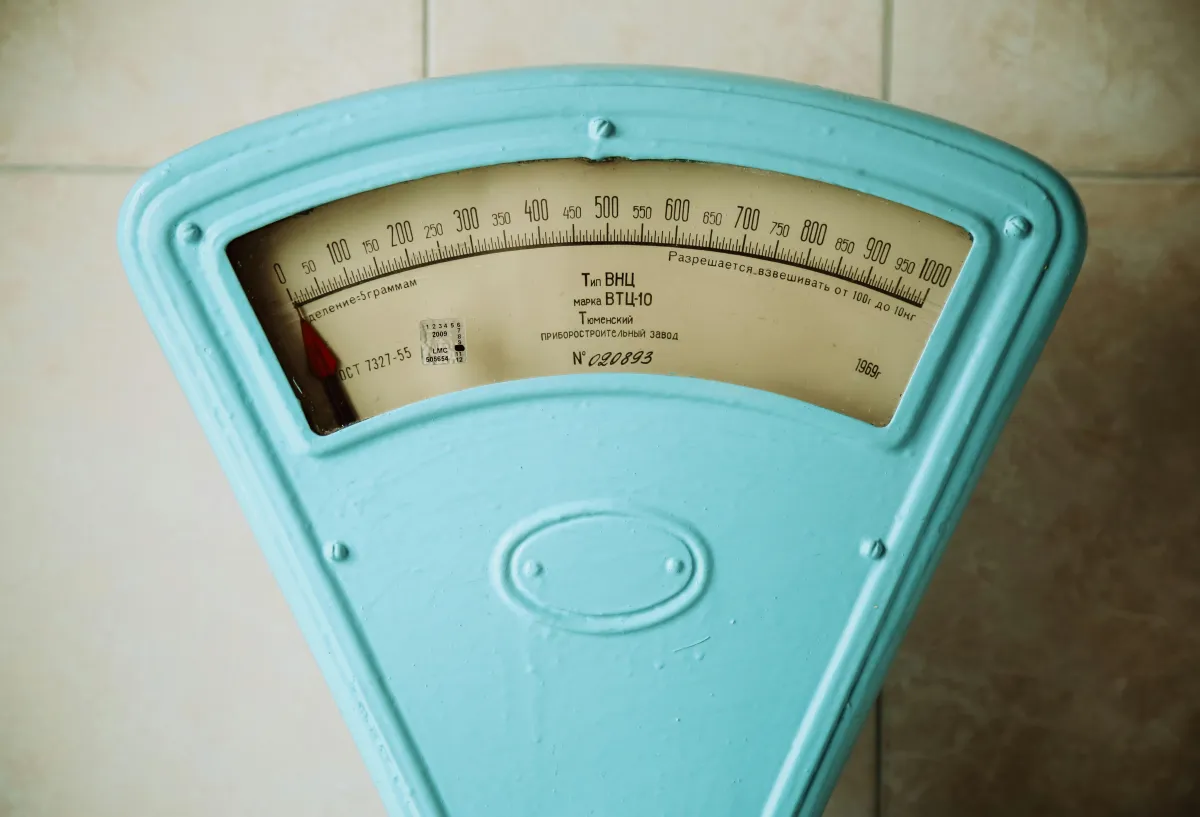
Weighing yourself every morning (yes, around the same time) and calculating a rolling average of the last 7 days is the best way to get an idea of what the numbers are actually doing.
Once you have all the data, you can calculate what you need in order to maintain your current weight (give yourself 10% plus or minus to allow for natural fluxuations), and then do your calorie calculations from there. You might be surprised - a 40 year old woman around 5'4" who exercises 3 times a week and is maintaining around 100kg (just under 16 stone) body weight, may be able to eat 2000kcal per day, and be in a sufficient calorie deficit to lose weight. Or a 60 year old man, 6 feet tall with a body weight of 80kg (12 and a half stone) may find that eating 2500kcal per day causes him to gain weight.
In order to lose half a pound a week, you should be aiming for a weekly total deficit of 1750 kcal, which could look like reducing your food intake by 200 calories and going for an extra 10 minute walk per day
For context, here's a list of things that are roughly 200 calories:
2 slices of bread
3 Digestive biscuits
500ml Coca Cola
a Pint of beer
16 Doritos
a Snickers
a Mango Loco flavour Monster
So permanently losing weight could be as painless as cutting out just three biscuits a day and going for a casual stroll after work - maybe you don't need The Diet at all.
